
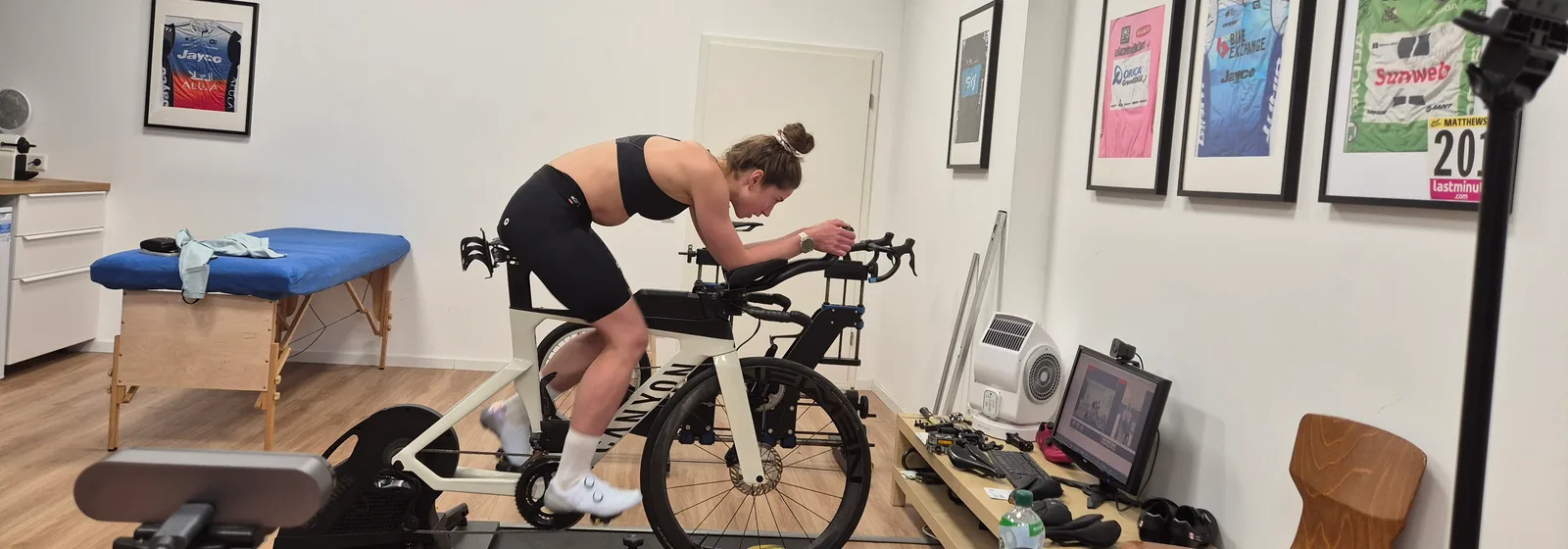
Achilles irritation rarely comes from one simple adjustment alone. The important question is how ankle movement, foot support and pedal loading are interacting through the full position.
That is why a small cleat move can change the symptom without solving the real cause.
I start with movement and control off the bike, then analyse the position under load. I want to see which elements are increasing strain through the ankle and tendon rather than only reacting to the painful spot.
The goal is a position that reduces unnecessary ankle strain while keeping the rest of the pedal stroke supported.
A bike fit is most useful when the bike or riding position is part of the load causing the symptom. It does not replace medical assessment for acute tendon pain, swelling or symptoms that are not clearly linked to riding.
The useful question is whether the setup is repeatedly asking too much from the ankle and calf every ride.


